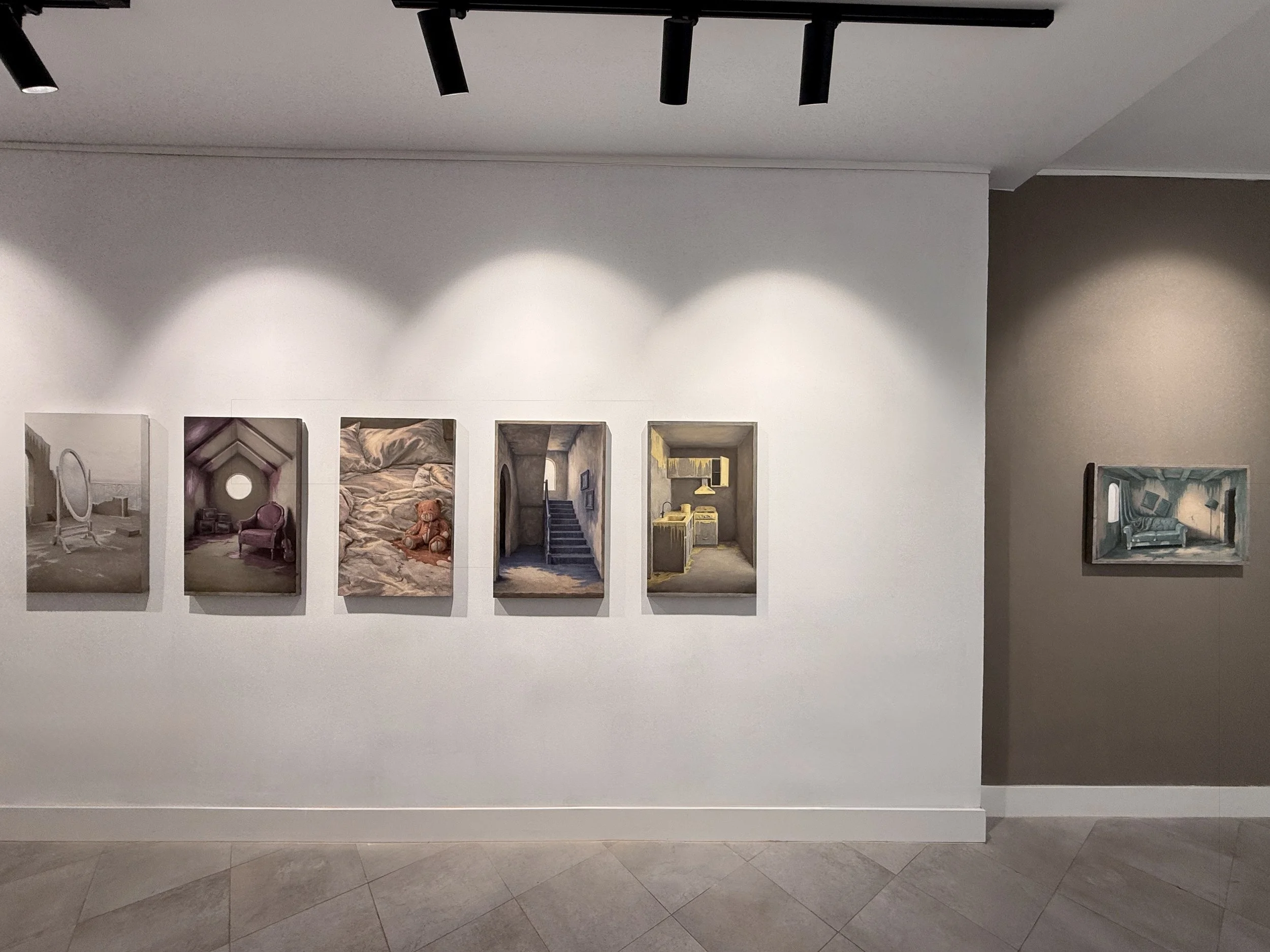
cellophane: Kate Contemporary Madrid
Crystal Tranquilino (2026)
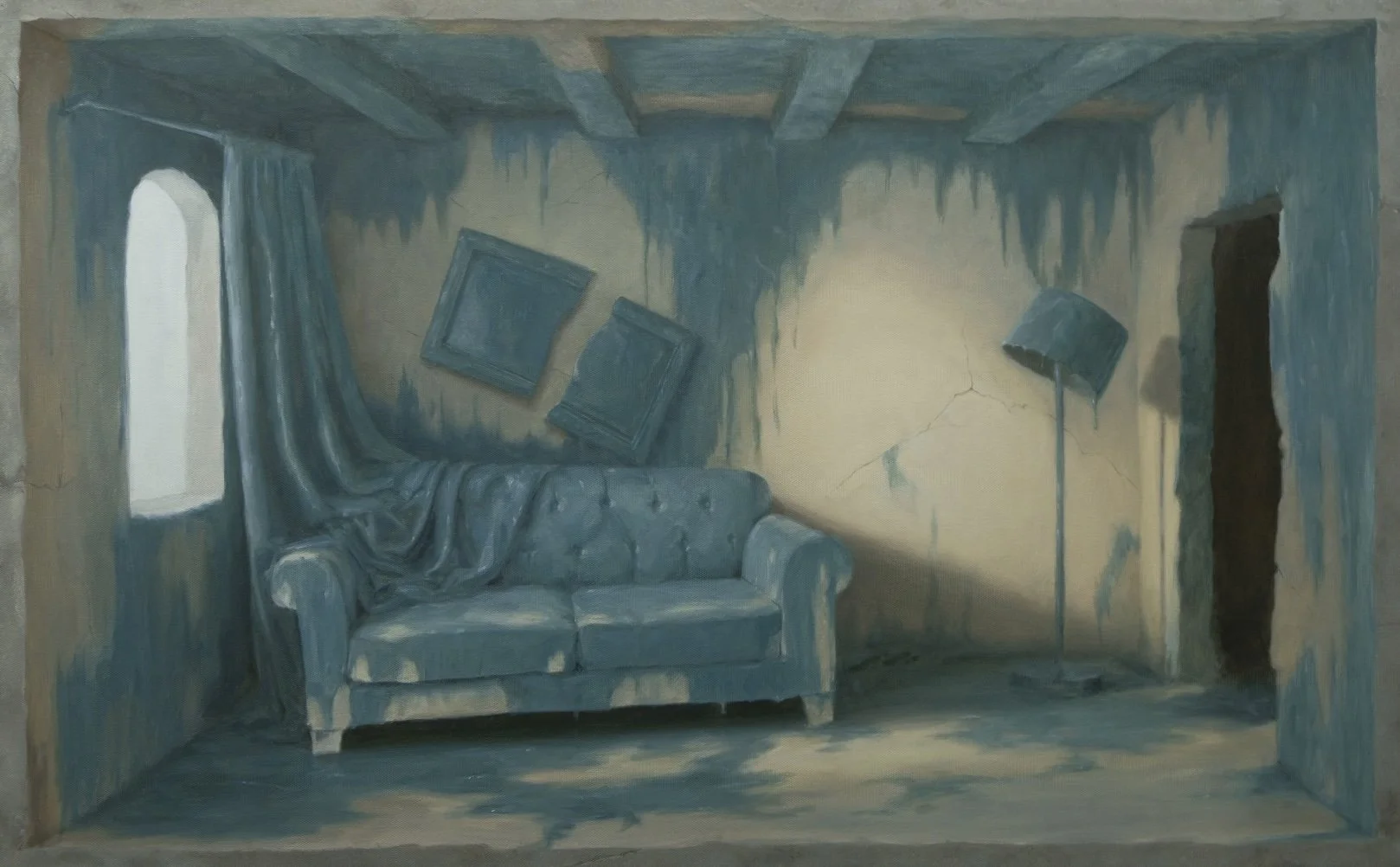
It could be any living room. A place where someone once sat, read, and waited.
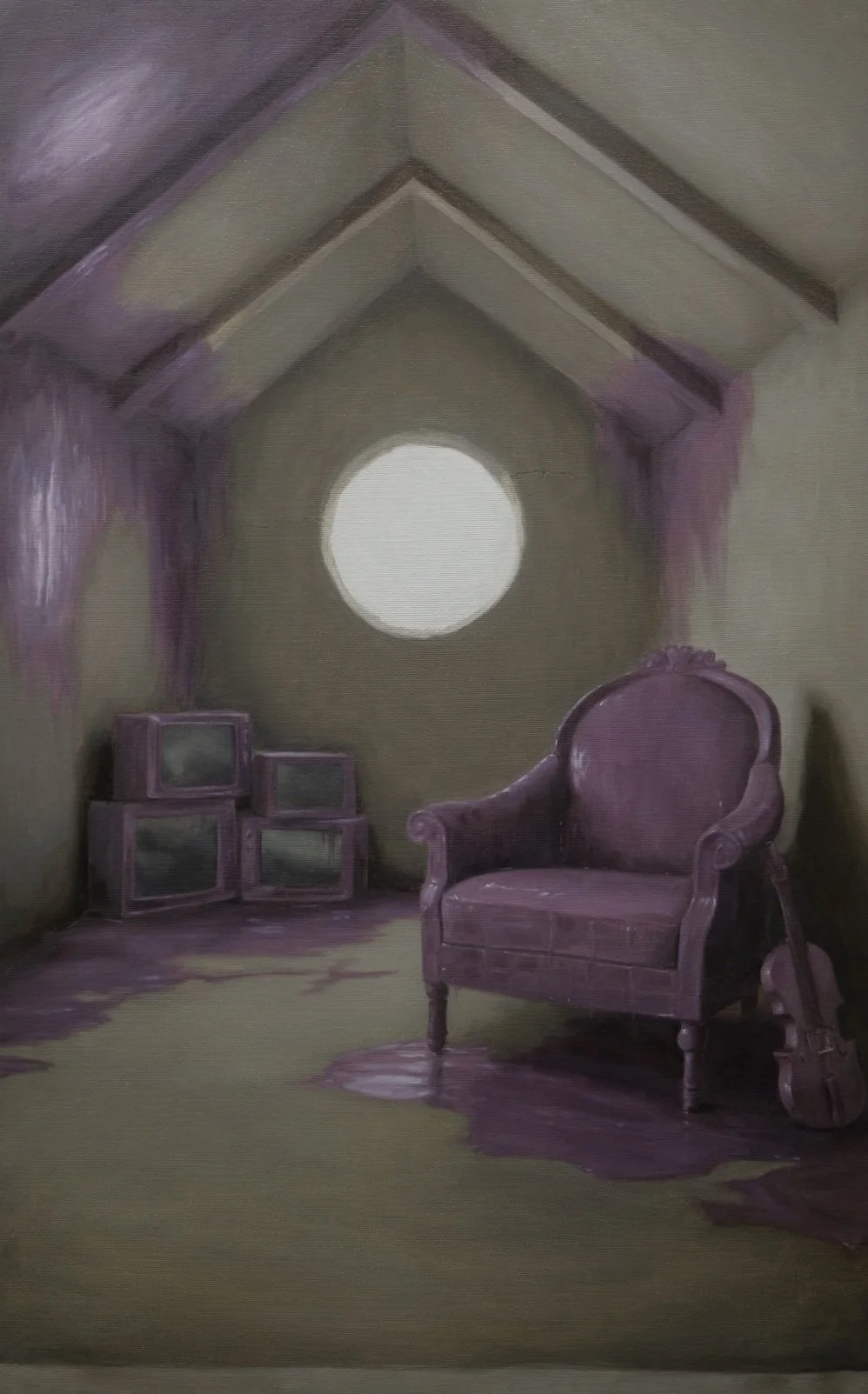
But slowly the ceilings begin to dissolve into color and alter the room’s quiet order, as if the sky had slipped inside. It does not collapse. It drifts into another state: half memory, half dream.
In Tranquilino’s cellophane, the house is a chamber. New slang is the portal.
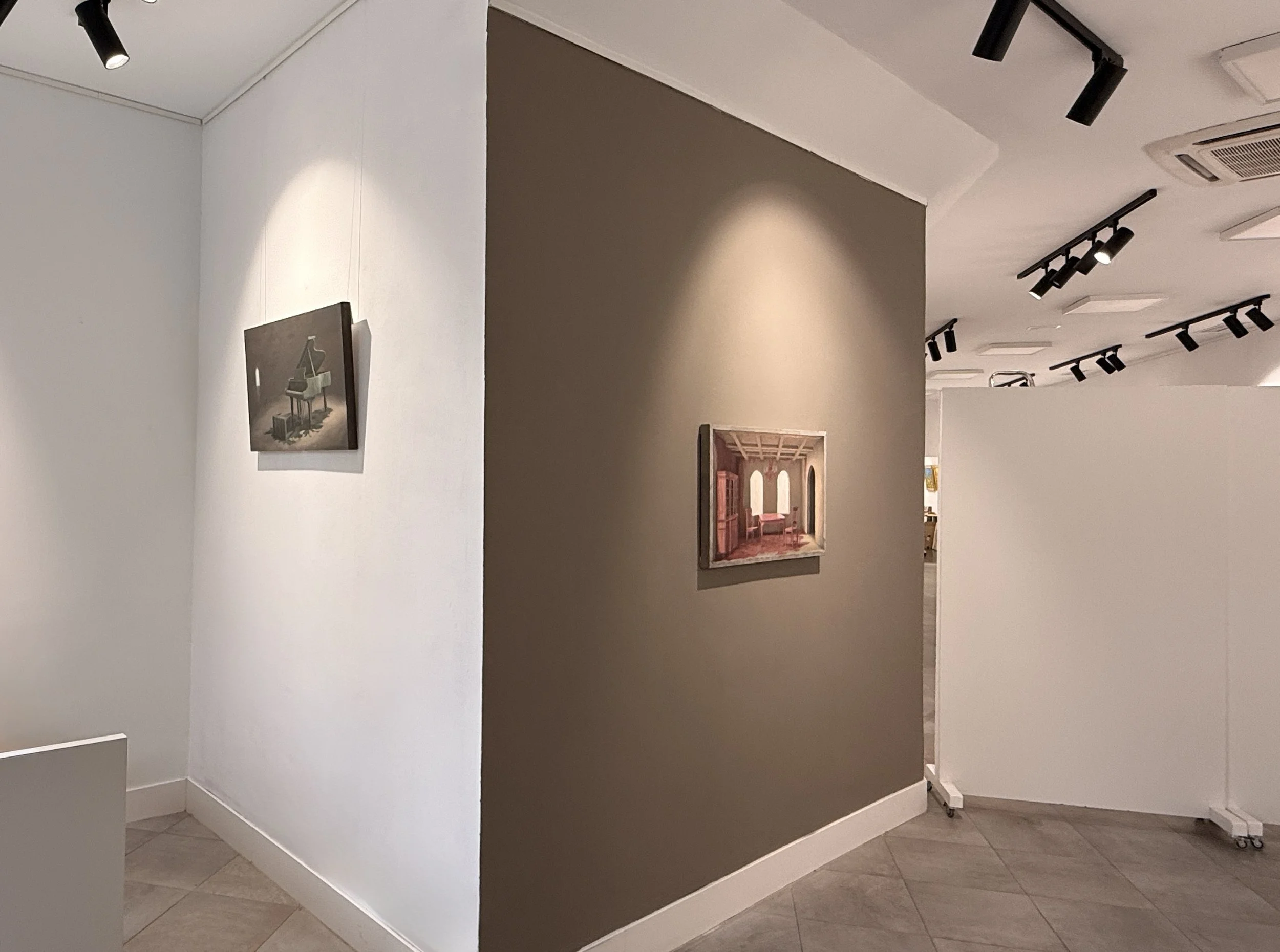
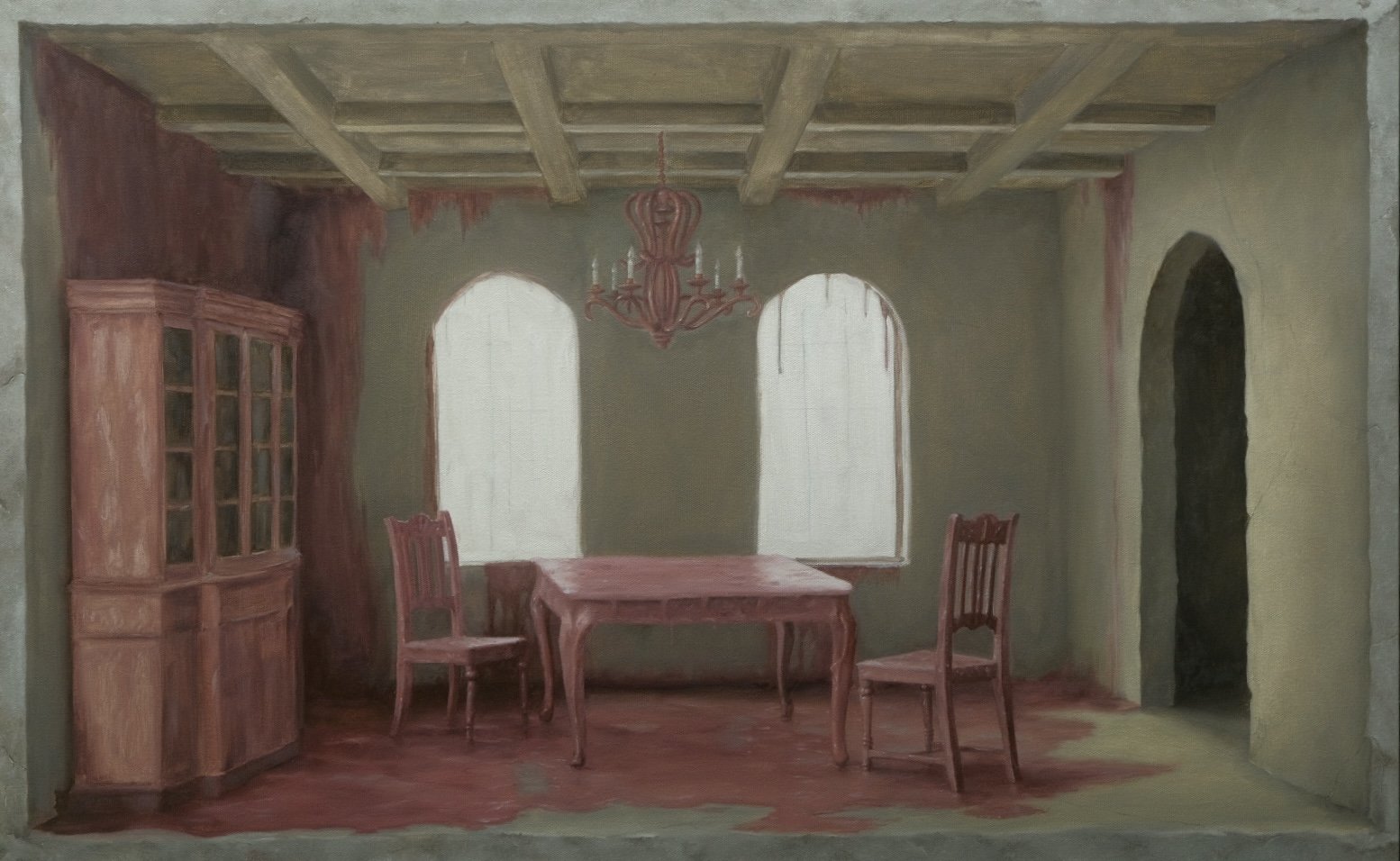
The space further opens to into a room arranged for company.
Everything is still, waiting without urgency. As if people had once circled each other here, slowly, carefully, learning the rhythm of being together.
Two Slow Dancers: Now folded into memory.
Further, it narrows into a kitchen, the inobtrusive engine of domestic life.
To julienne is to take something whole and divide it into thin, deliberate strands. Memory performs a similar gesture. What once felt continuous becomes carefully separated into fragments.
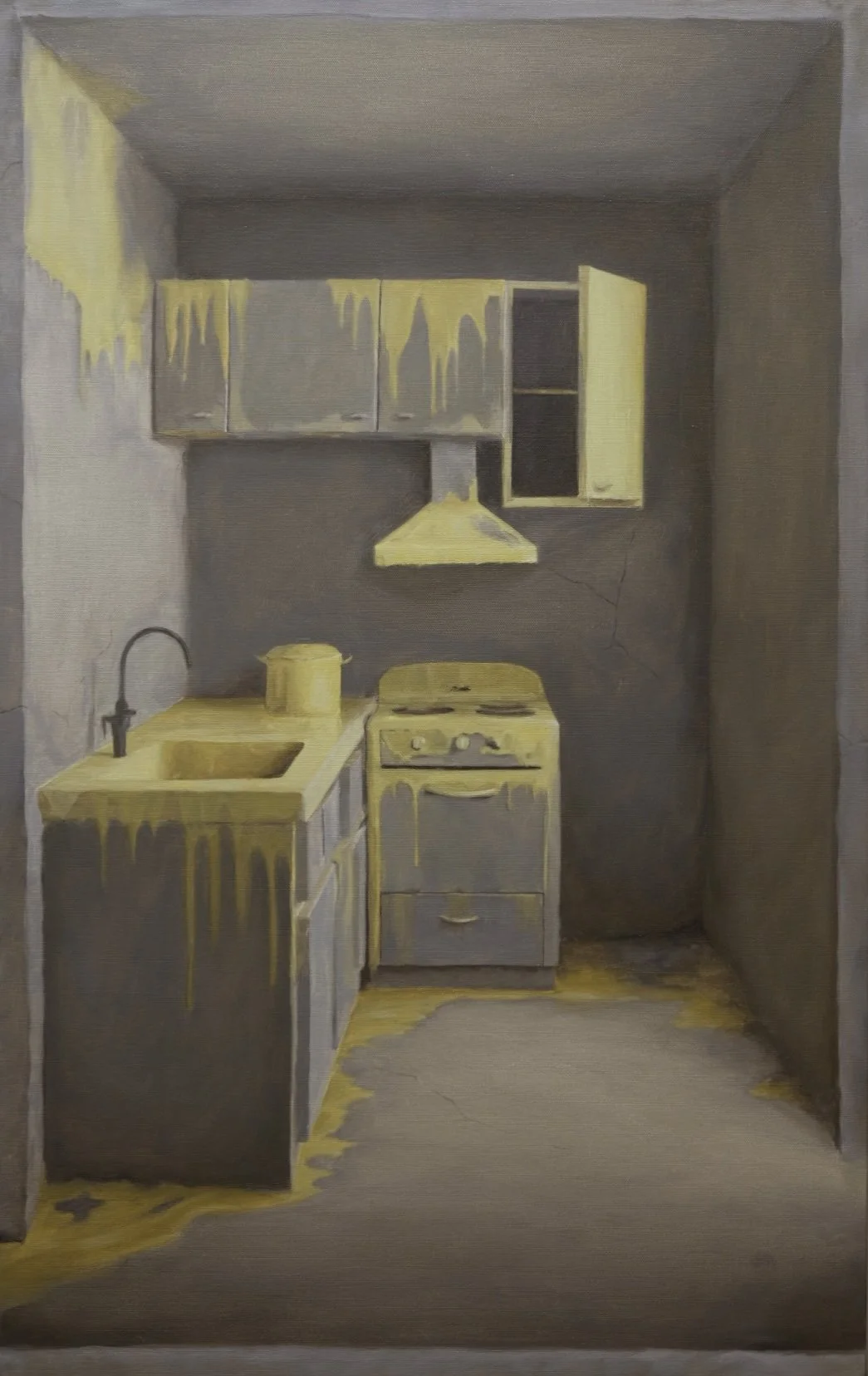
Somewhere in the house there is a room that feels almost accidental. It is not clearly part of the plan, yet it exists— like a pause between chapters.
Stage Left marks the edge of performance, the place where someone steps out of view. Remembrance behaves in a similar way: it appears, fills the room, and then disappears, leaving only its resonance behind.
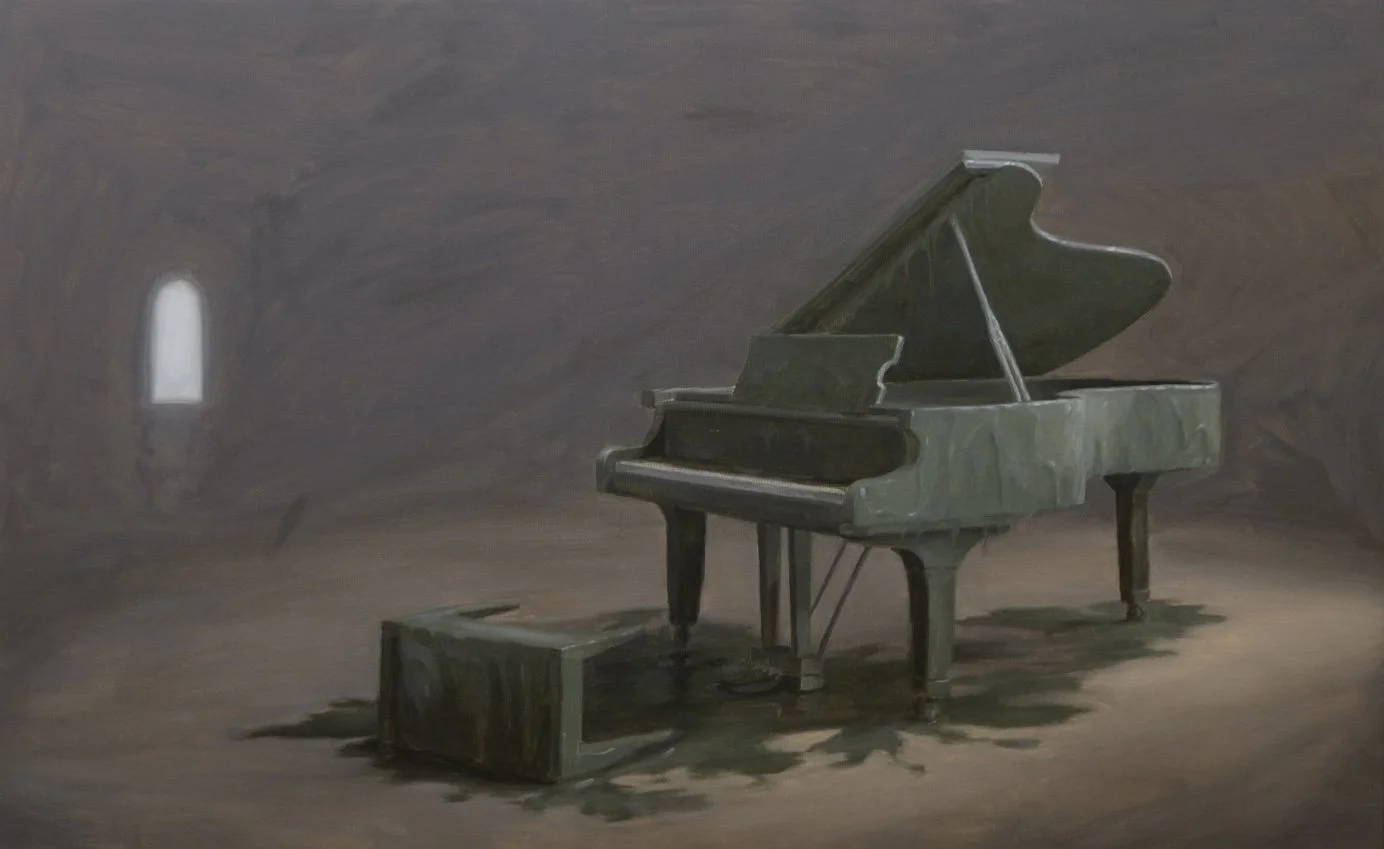
Oro holds a channel. A threshold marking the point where this reminiscence begins to turn inward.
Each step marks a gradual shift. What lies beyond is no longer simply recalled but contained and held close in areas not easily entered.
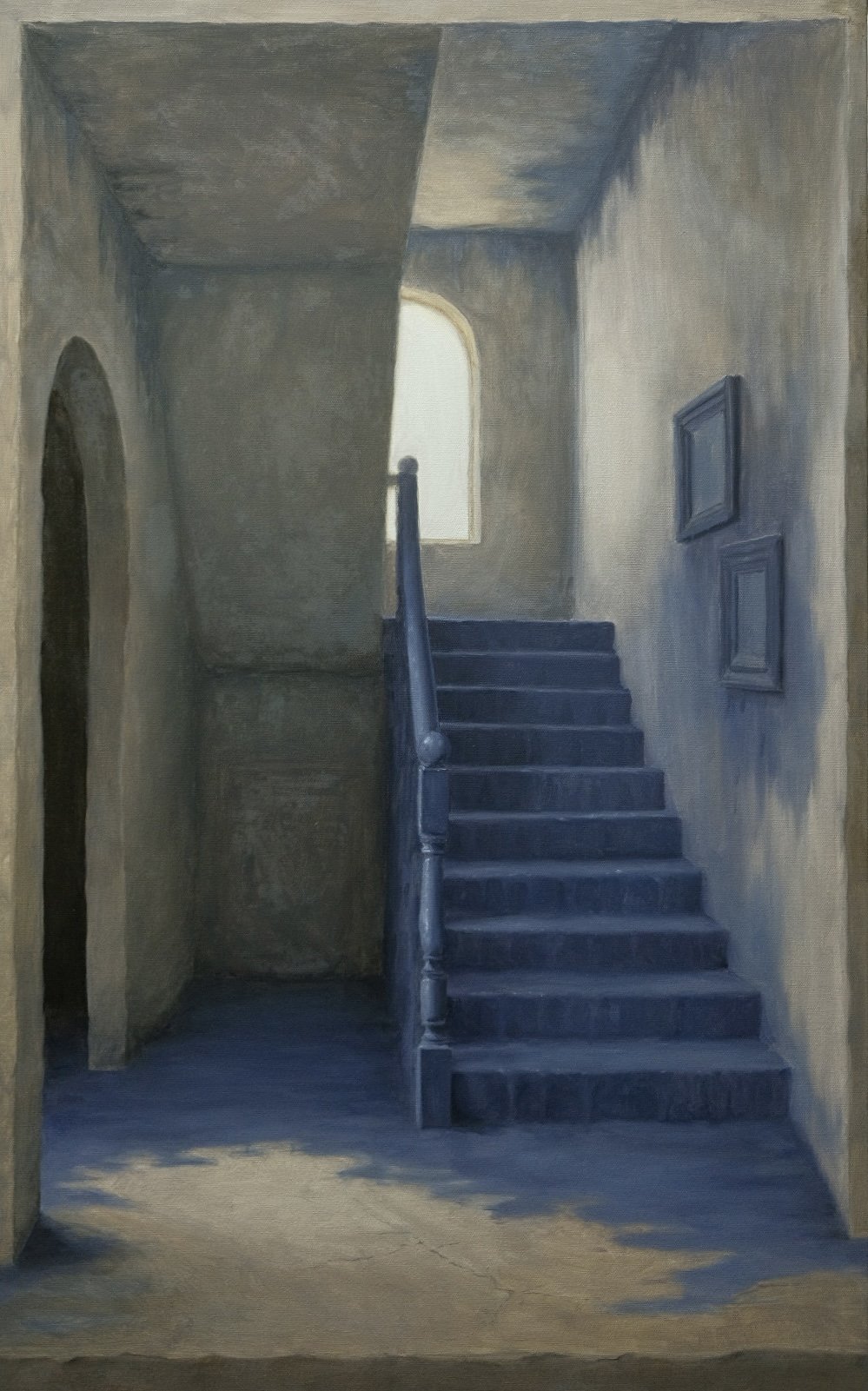
Upstairs, everything becomes more intimate. Here, space does not simply contain memories— they guard them.
Ivory recalls a time when comfort was simple, when the world could be held together by the presence of something familiar in one’s hands.
How the simplest things often carry the greatest meaning.
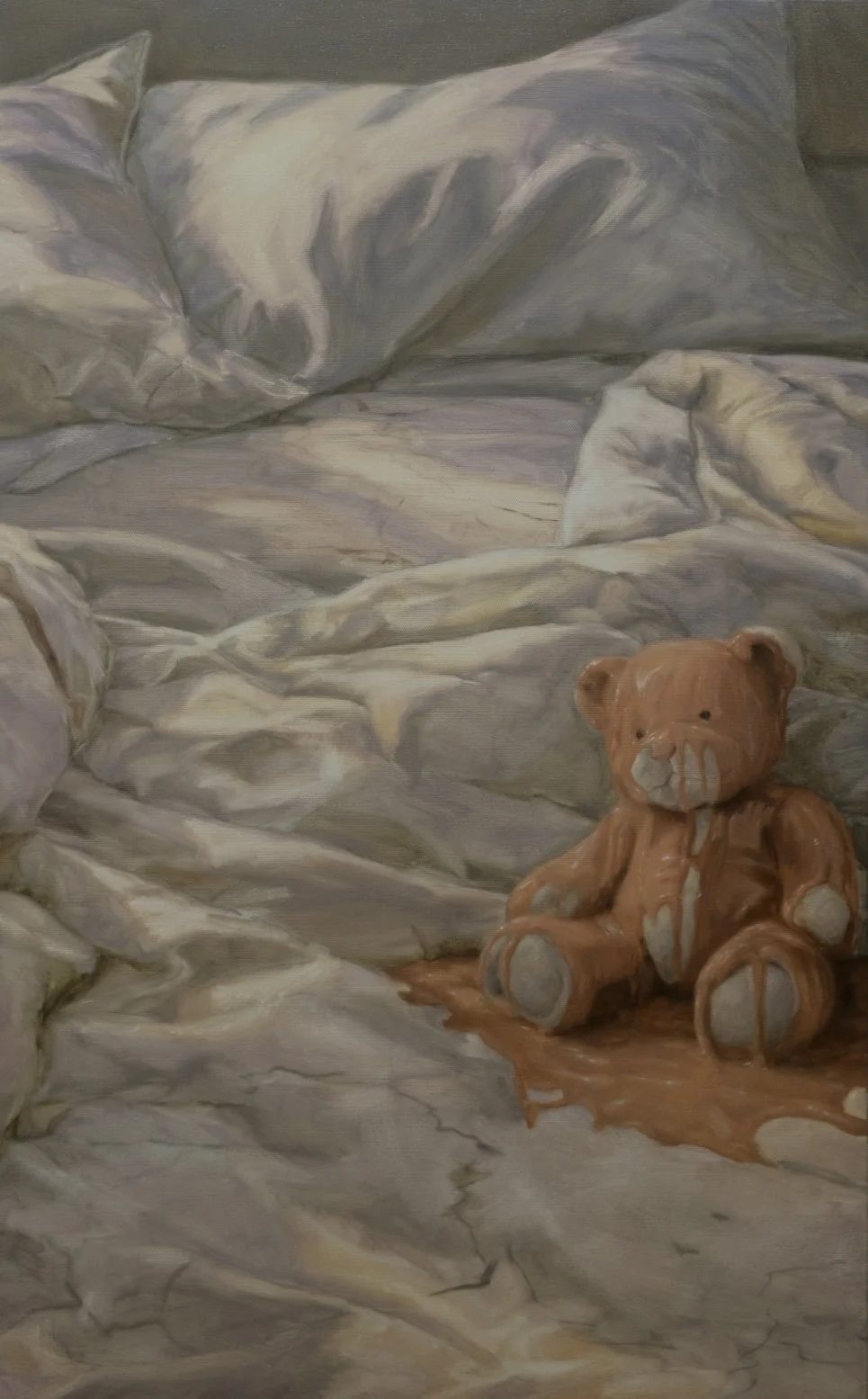
Eden suggests a place imagined as pure or untouched. In this sense, it takes on another meaning: a secluded interior where the hidden aspects of the self silently dwell.
It holds what remains unspoken; even from others who walk the same home.
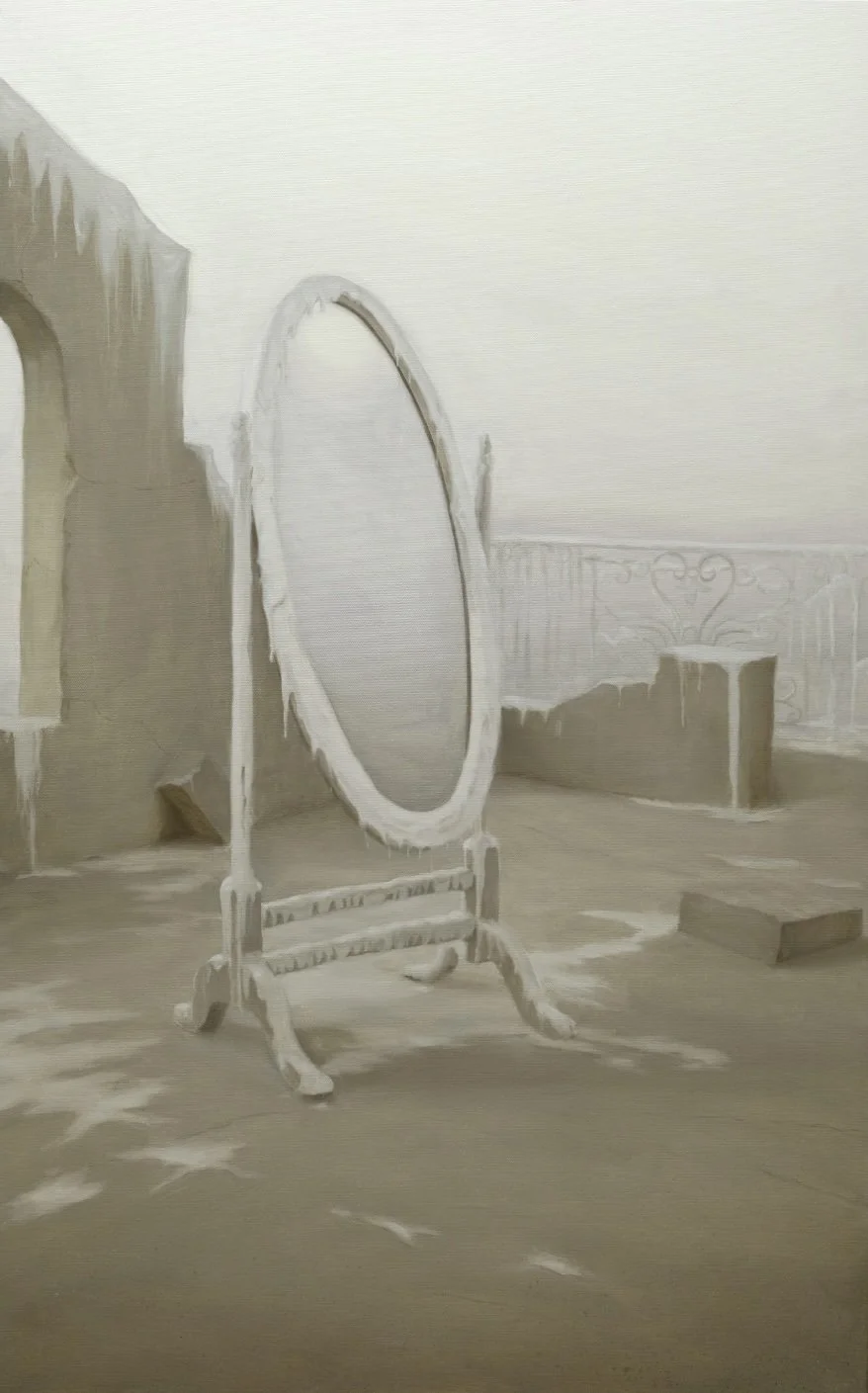
At this house’s highest point, the architecture opens outward. The balcony opens toward the sky after passing through rooms that held these fragments.
A mirror stands reflecting only the open expanse above. It suggests a moment of surrender, where the past is no longer something to revisit but something to carry.
In cellophane, Parting Gift seems like the closing passage: that the journey ends not in possession, but in release. Recognizing that memories endure within us— not as a weight to bear, but as a compass for what lies ahead.
Curation and Annotations by Chan Alvarez