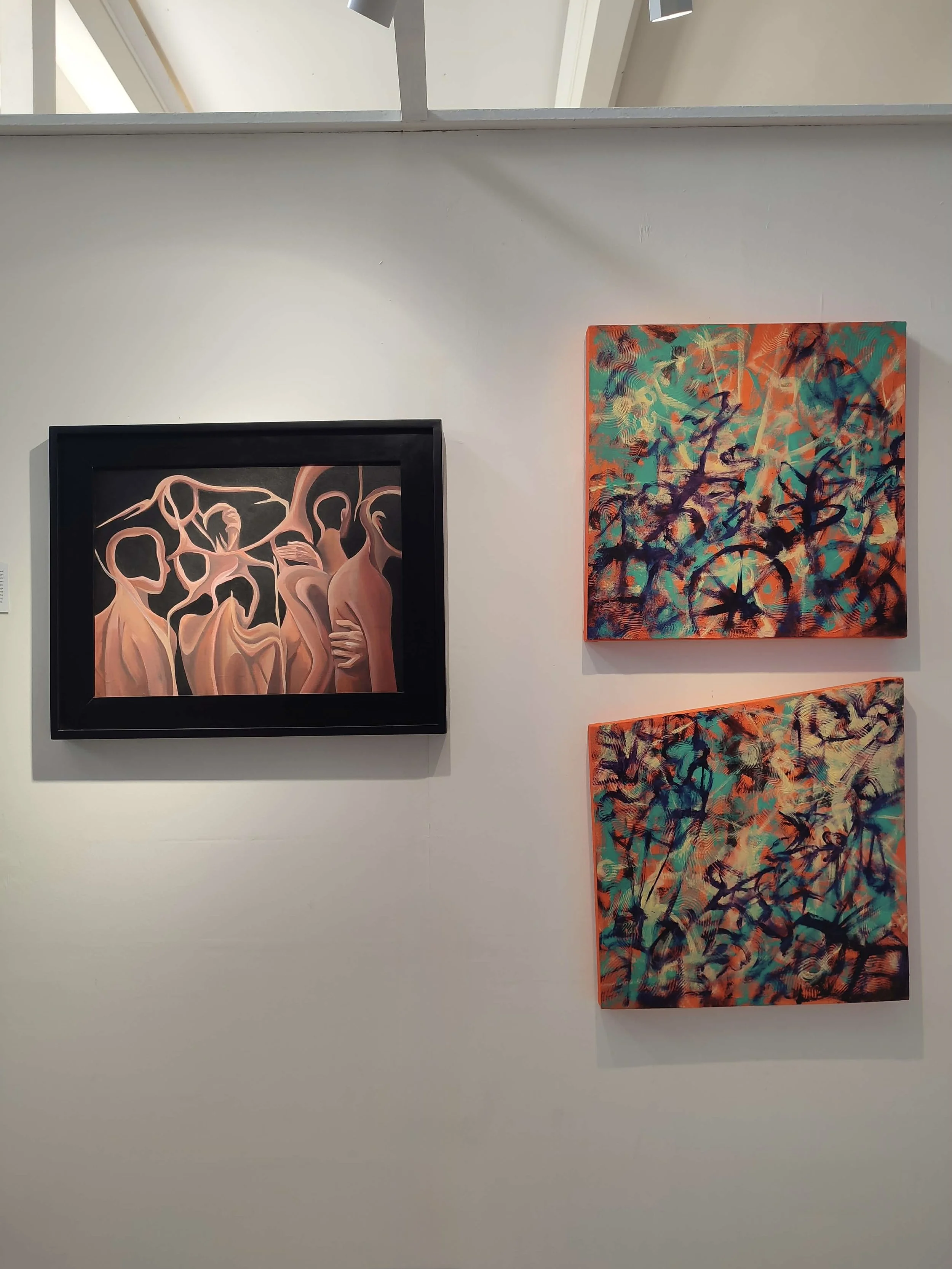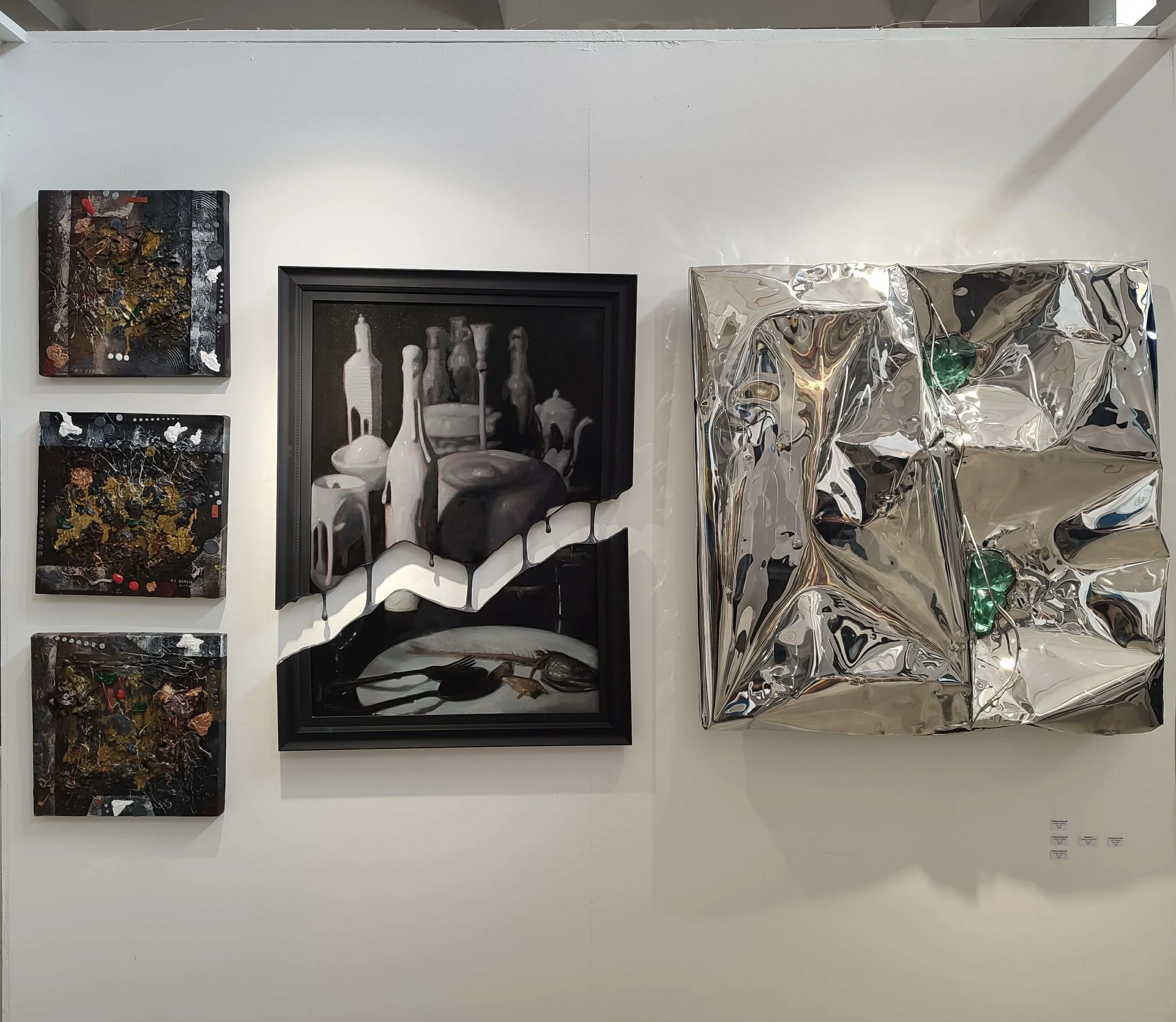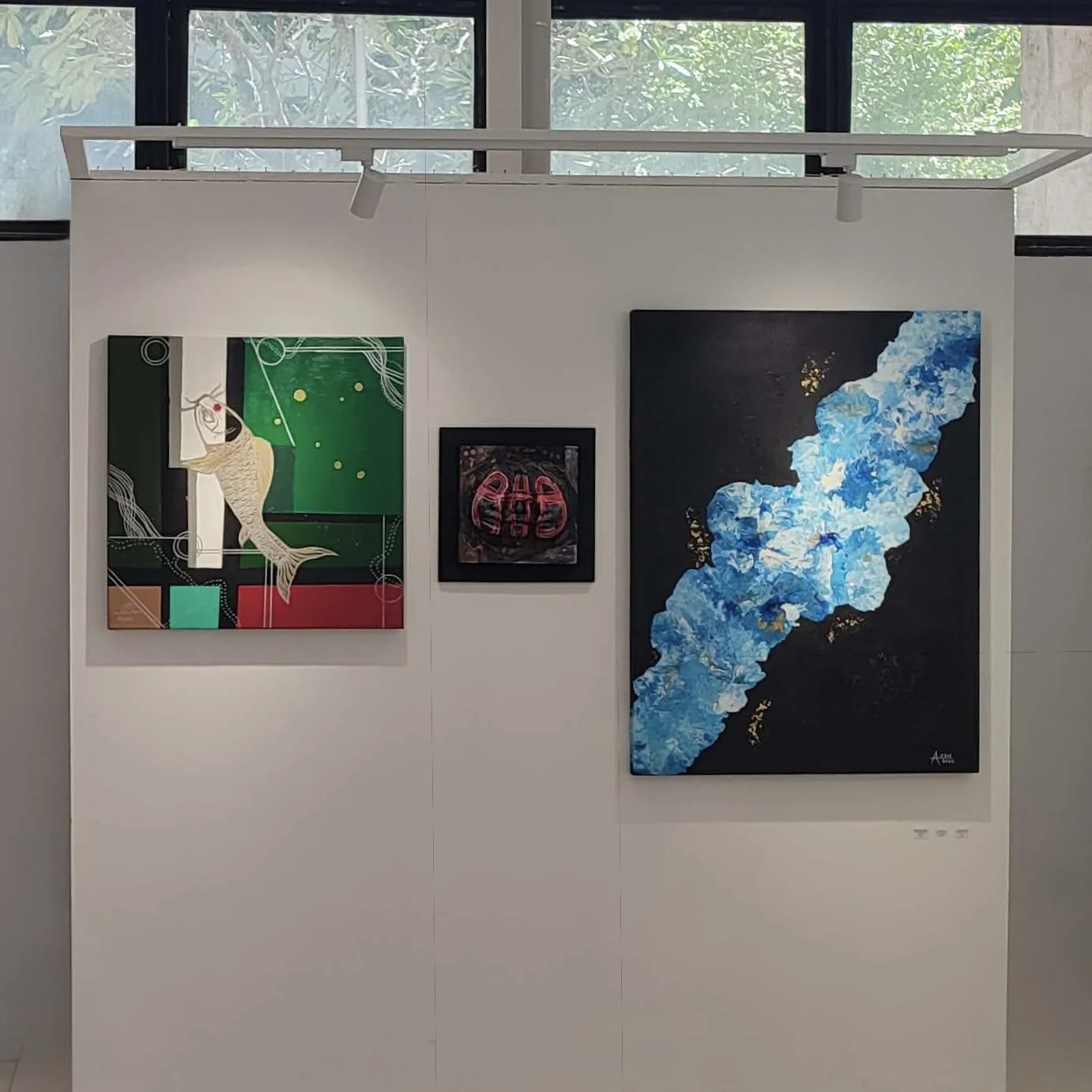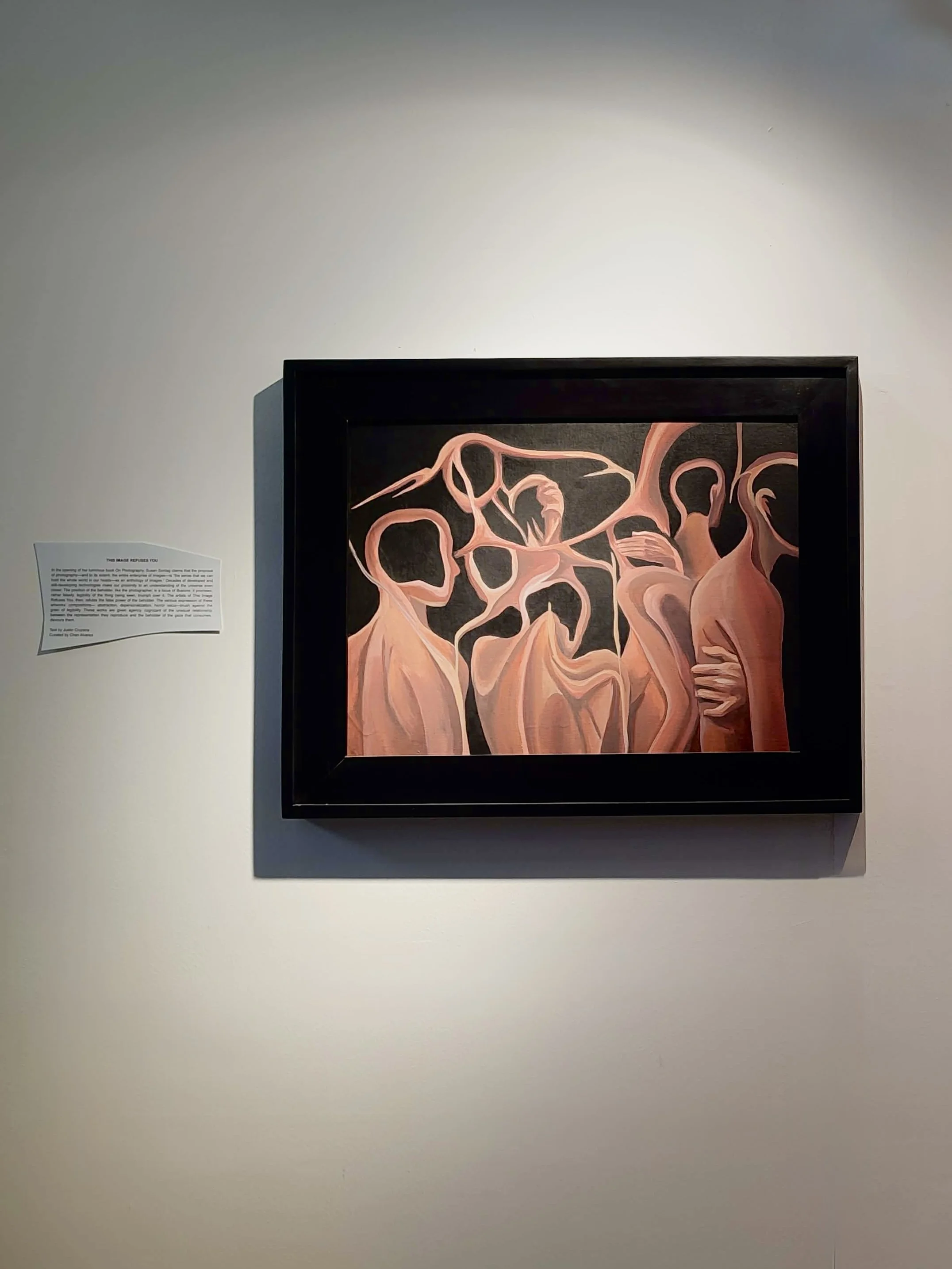
In the opening of her luminous book On Photography, Susan Sontag claims that the proposal of photography—and to its extent, the entire enterprise of images—is “the sense that we can hold the whole world in our heads—as an anthology of images.” Decades of developed and still-developing technologies make our proximity to an understanding of the universe even closer. The position of the beholder, like the photographer, is a locus of illusions: it promises, rather falsely, legibility of the thing being seen, triumph over it. “It means putting oneself into a certain relation to the world that feels like knowledge,” Sontag wrote, “and therefore, like power.”
Six Degrees of Separation: Coda
This Image Refuses You: ART LUZON 2026
The artists of This Image Refuses You, then, refutes the false power of the beholder. The various expression of these artworks’ compositions—abstraction, depersonalization, horror vacui—brush against the grain of legibility. These works are given agency, cognizant of the unequal relationship between the representation they reproduce and the beholder of the gaze that consumes, devours them. Like Barbara Kruger’s critical 1981 artwork Untitled (Your gaze hits the side of my face), the works in This Image Refuses You are turning their many-faced cheeks away, as agents intent on curbing vision.
The idea that possessing sight over something is to hold considerable power over it is a lie. The image, however, faithfully the attempt is produced, cannot fully represent the Real. The representational field, the arena by which we come to know ourselves as subjects and to make an Other of others, is a realm of half-truths we claim to believe in, because through it and in it, “the spectator can secure a coherent belief in self-authority, assurance, presence.” (Peggy Phelan, Unmarked: The Politics of Performance.) The gaze hones self-identity by looking at the other, but self-identity, as Phelan reminded us, “needs to be continually reproduced and reassured precisely because it fails to secure belief.” We can never look at things truest to what they are; it makes us want to look even more.
The ultimate philosophical position of This Image Refuses You, then, is accepting what Phelan called the “radical impotency of the gaze.” It means, on one hand, maintaining a strategic comfortability with blanks and distortions, in understanding the full extent of our unknowing. On the other hand, it reassures us that the things we see that cling to their visibility for legitimacy cannot be the axioms they claim to be. “Visibility is a trap,” wrote Phelan, “it summons surveillance and the law; it provokes voyeurism, fetishism, the colonialist / imperial appetite for possession.” Visibility can also signal overconfidence for what it thinks true. It is the accomplishment of these artists then, who have faith in the gaze and the possibility of its failures, to teach us how to doubt, and have hope for what we doubt.
Works Cited:
Phelan, Peggy. Unmarked: The Politics of Performance, Routledge, 1993.
Sontag, Susan. On Photography, Picador, 1973
Exhibition Notes by Justin Cruzana
THIS IMAGE REFUSES YOU
ART LUZON 2026 (VD Art Collective)
Selected Group Exhibition
Curated by : Chan Alvarez